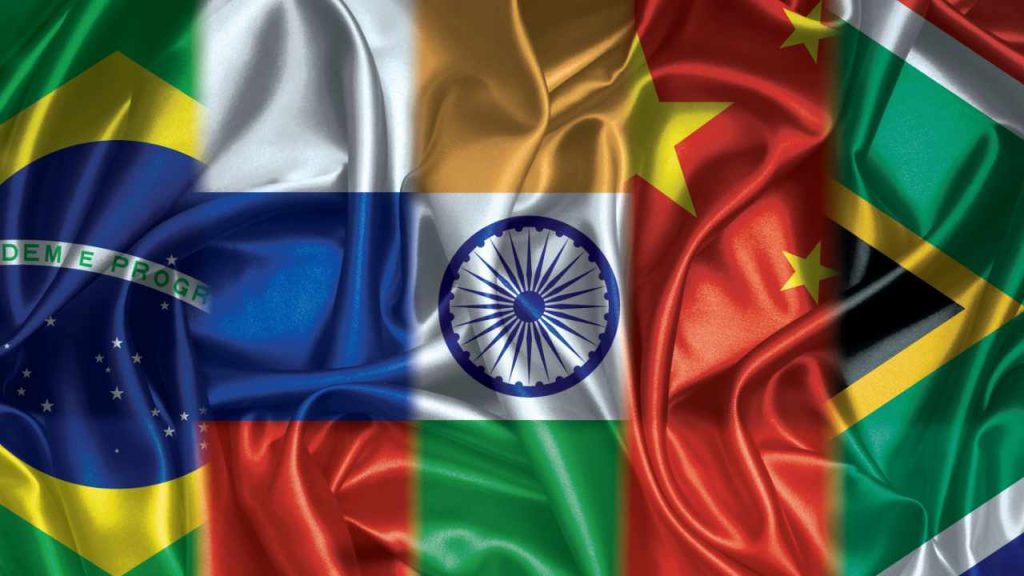
In the global race for artificial intelligence supremacy, a new contender is rising—not in the form of a single nation, but as a coalition. The BRICS bloc—Brazil, Russia, India, China, and South Africa—is asserting itself as a formidable force in reshaping the contours of AI development, ethics, and infrastructure. No longer content to play catch-up, these nations are building a parallel AI ecosystem—one rooted in sovereignty, inclusivity, and resistance to Western digital hegemony.
China Leads with Scale and Strategy
At the core of BRICS’ AI surge is China, already a heavyweight in the field. According to Stanford’s 2024 AI Index, China now accounts for 47.2% of the world’s most-cited AI research and leads globally in AI patent filings. Its government-backed “New Generation Artificial Intelligence Development Plan” has secured over $150 billion, fuelling a powerful ecosystem of innovation. Tech giants like Baidu and Huawei are now producing AI chips and large language models (LLMs) that rival those of Silicon Valley titans like Google and OpenAI.
India’s Sovereign AI Vision
India is crafting its own narrative of AI ascendancy. With a digitally fluent population and a booming startup culture, it launched the IndiaAI mission in 2023—a $1.2 billion initiative to foster open-source Indic language models, strengthen sector-specific AI for health, agriculture, and education, and support indigenous chip design. This positions India not just as a consumer of AI, but as a creator of culturally rooted, sovereign solutions.
Russia’s AI for Defense and Sovereignty
For Russia, AI is not just about innovation—it’s a matter of national security. President Vladimir Putin in 2023 declared AI the “battlefield of the future,” unveiling the National AI Strategy 2030, which allocates over 100 billion rubles ($1.2 billion) to military tech, speech recognition, and automation. Russia’s flagship LLM, GigaChat, aims to compete in both civilian and defense sectors.
Ethical Innovation in Brazil and South Africa
Brazil and South Africa are becoming ethical pioneers in AI, particularly in public health and agriculture. Brazil’s state research company, Embrapa, is developing precision agriculture tools using satellite and AI data, while South Africa’s CSIR is integrating AI into eHealth and smart mobility programs. These efforts prioritize inclusivity, showing that AI can serve communities, not just corporations.
Meanwhile, Ethiopia and Egypt, often aligned with BRICS initiatives, are investing in AI research hubs and smart governance infrastructure—most notably Egypt’s “Digital Nation” platform, powered by machine learning for public administration.
Breaking Free from the Western AI Order
At the heart of BRICS’ AI vision is a rejection of Western digital monopolies. Today’s AI infrastructure is overwhelmingly dependent on cloud services from Amazon, Google, and Microsoft, and foundational models like GPT-4 and Claude reflect Western values, languages, and epistemologies. This asymmetry risks locking the Global South into a subordinate role in the AI revolution.
To counter this, BRICS nations are actively developing regional LLMs. China has produced WuDao and Ernie, Russia rolled out GigaChat, and India’s Bhashini initiative is a cornerstone of AI linguistic sovereignty, training models in dozens of Indic languages. In a bold move, Brazil and China announced a joint AI research venture in 2024 to create a Portuguese-Spanish LLM, fine-tuned for Latin American contexts.
AI Governance: A Global South Alternative
BRICS is also carving out a distinct approach to AI governance. At the 2024 BRICS Summit in Kazan, members adopted the “BRICS Charter on Responsible AI,” a regulatory framework that promotes inclusive, transparent, and culturally aware AI development. This stands in contrast to the EU’s AI Act, which many in the Global South view as restrictive and Eurocentric, potentially stifling innovation in emerging economies.
Toward AI Autonomy: Financing & Infrastructure
To break its dependence on Western infrastructure, BRICS is investing heavily in AI sovereignty. The New Development Bank (NDB), headquartered in Shanghai, launched a $5 billion “Digital Sovereignty Fund” in 2025. This fund is underwriting data centers, research parks, and semiconductor fabrication projects across member nations. Early beneficiaries include the UAE’s AI cloud cluster and Ethiopia’s AI Research and Education Zone in Addis Ababa.
Semiconductor independence is another strategic priority. China’s SMIC and India’s CDAC are developing 7nm chip production, aiming to rival NVIDIA and Intel. Iran’s national quantum computing initiative and the UAE’s AI conglomerate G42 further signal the bloc’s ambition to control its own compute stack.
A New AI World Order
The BRICS alliance isn’t simply chasing Western AI dominance—it’s rewriting the rules. From language models that speak Zulu and Tamil to AI policies grounded in postcolonial realities, BRICS is building a decentralized, multi-polar digital future. It is a vision where innovation serves local needs, power is distributed, and data sovereignty becomes a cornerstone of national development.
As AI increasingly defines global influence, BRICS is positioning itself not just as a rival to the West—but as an architect of a more balanced digital era.